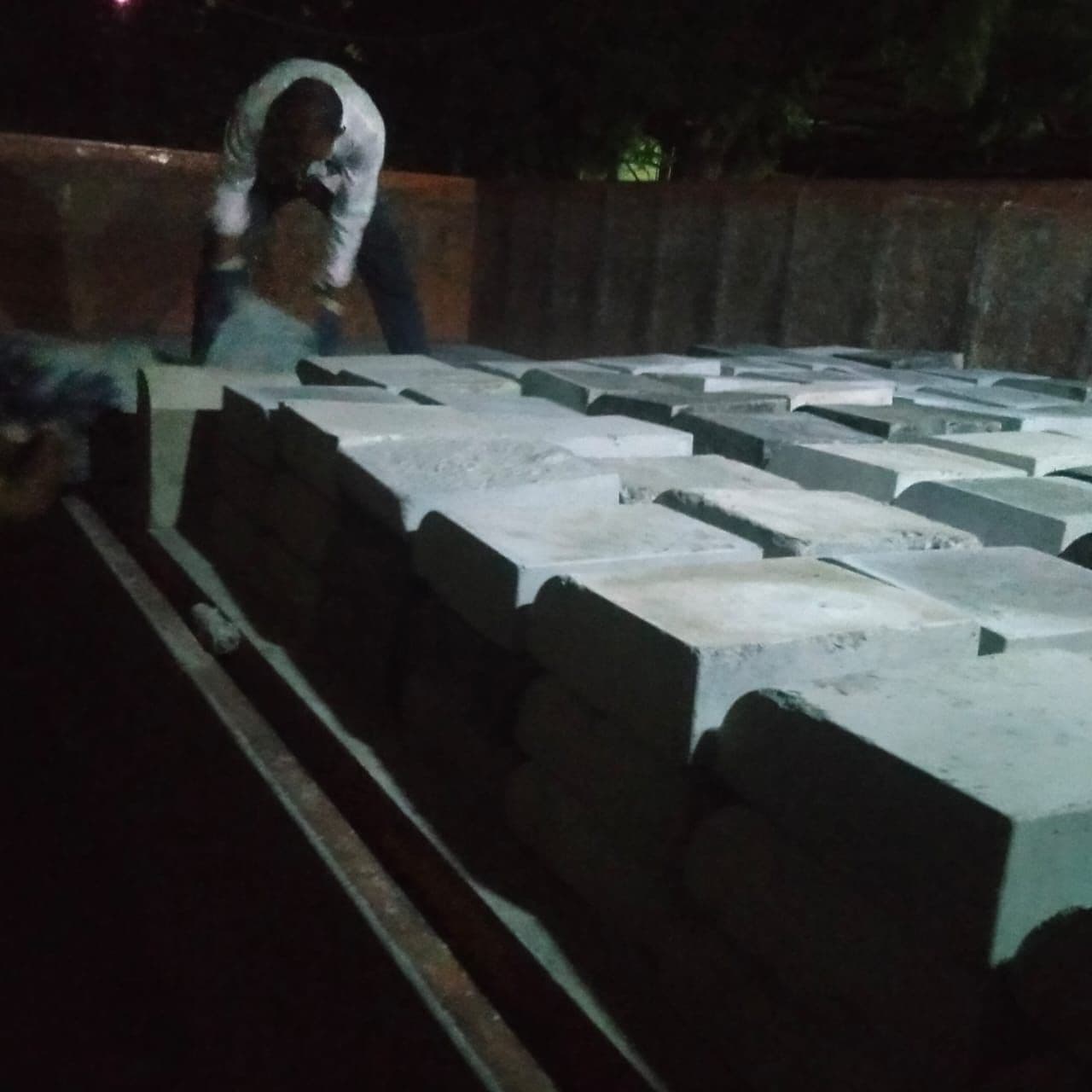
What are kerb stones used for?
Kerb stones are precast concrete products used to define, separate, support, or protect edges in outdoor projects. They are commonly used for road edges, driveway edges, pathway borders, garden borders, landscape separation, parking edges, and site demarcation.
A kerb stone is not selected only by appearance. The correct choice depends on site use, required size, height, running length, installation method, loading condition, and delivery location.
Common applications of kerb stones
Kerb stones are used in many types of projects, including:
- Road edges
- Driveway edges
- Parking area boundaries
- Garden borders
- Pathway separation
- Landscape edges
- Footpath edges
- Site level demarcation
- Institutional and commercial projects
For residential projects, kerb stones are often used around gardens, pathways, driveways, and parking edges. For commercial or institutional work, they may be used for road alignment, parking separation, and site development.
Choose the kerb size based on site use
Kerb stone size should be selected according to the site requirement. A small landscape border and a road edge may not need the same size.
Common selection factors include:
- Required edge height
- Length of boundary or road edge
- Expected vehicle movement
- Installation base
- Visible finish requirement
- Whether the kerb is for garden, road, driveway, or parking
- Site level difference
- Handling and unloading condition
If you are unsure about size, share the site use and a photo of the edge or boundary area.
Round kerb stone vs taper kerb stone
Kerb stones can have different profiles depending on the mould and application. Round kerb stones and taper kerb stones are both used for edge control and demarcation, but the final selection depends on appearance, available size, site requirement, and installation preference.
Before ordering, confirm:
- Shape/profile
- Size
- Length per piece
- Height or thickness
- Quantity or running length
- Colour requirement
- Delivery location
How kerb stone quantity is estimated
Kerb stones are usually estimated by running length, not by square feet.
The basic logic is:
Required pieces = Total running length ÷ Running length per piece
For example, if one kerb stone is 300 mm long, it covers about 0.3 running meter or 0.984 running feet. If the required edge length is 100 running feet, the approximate quantity is:
100 ÷ 0.984 = about 102 pieces
The final quantity may vary based on cutting, corners, layout, wastage, breakage allowance, and site measurement.
Why actual site measurement matters
A kerb stone estimate should be based on actual site measurement. Drawings or rough measurements can help, but final quantity should be checked on site.
Quantity may change due to:
- Corners
- Curved edges
- Level changes
- Cutting requirement
- Gaps or joint planning
- Site changes
- Handling wastage
- Edge layout
For long edges, road work, or multiple boundary lines, measure each section separately before final order confirmation.
Delivery and unloading need planning
Kerb stones are heavy precast products. Delivery planning should be discussed before dispatch, especially for large quantities.
Share these details early:
- Delivery location
- Quantity
- Kerb size
- Site access condition
- Unloading arrangement
- Vehicle entry restrictions
- Preferred delivery date
- Contact person at site
If the site has narrow access, restricted entry timing, or limited unloading space, mention it before dispatch planning.
Installation affects final performance
Kerb stones need proper installation support. Product quality matters, but performance also depends on base preparation, alignment, bedding, jointing, back support, and site compaction.
Installation-related factors include:
- Level setting
- Base support
- Alignment string line
- Joint spacing
- Concrete backing if required
- Drainage and slope
- Proper curing or support around installed kerbs
For project work, the contractor, site engineer, or installation team should verify the installation method based on the actual site.
What to share before requesting a kerb stone quote
For a faster kerb stone quote, share:
- Kerb stone type or profile
- Required size
- Total running feet or running meters
- Approximate number of pieces if known
- Site use
- Colour requirement if any
- Delivery location
- Unloading arrangement
- Timeline or urgency
If you are unsure about the exact product, share the site use and photos of the edge where kerbs are required.
Final recommendation
Choose kerb stones based on site use, size, running length, installation requirement, delivery access, and edge purpose. Do not select only by price or appearance.
For Gurugram, Delhi, and Delhi NCR projects, share running length, kerb size, quantity, and delivery location with AR Precast for faster quote discussion.