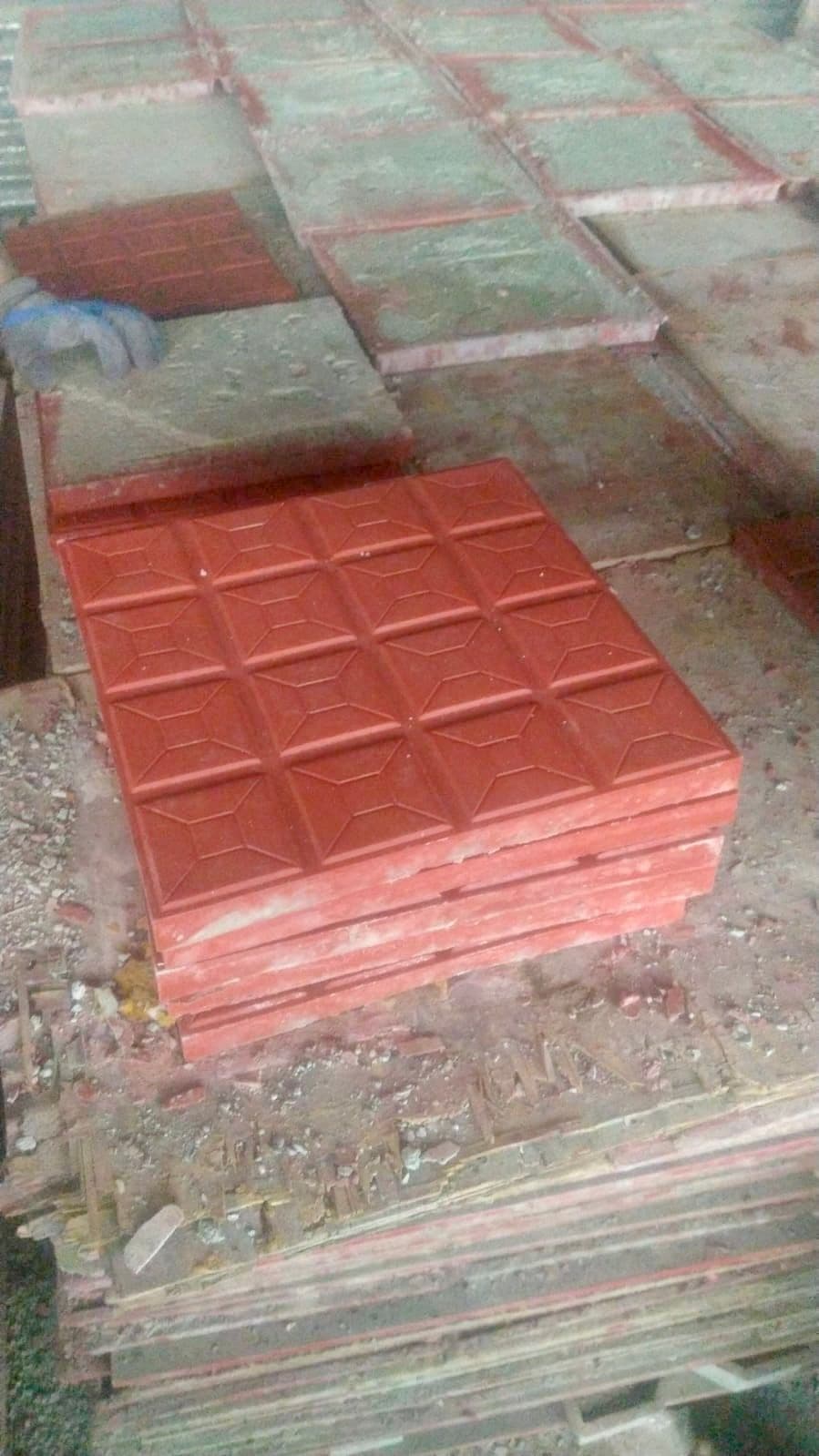
Chequered tiles and interlock pavers solve different site needs
Chequered tiles and interlock pavers are both precast concrete products, but they are not used for the same purpose in every project. The right choice depends on site use, expected load, thickness, base preparation, surface requirement, quantity, and delivery location.
For buyers in Gurugram, Delhi, and Delhi NCR, the practical question is simple: is the area mainly for walking, parking, outdoor paving, or vehicle movement?
Where chequered tiles are commonly used
Chequered tiles are commonly used for walking and light-use surfaces. They are practical for footpaths, exterior utility areas, pedestrian areas, and outdoor flooring where grip and surface finish are important.
Common uses include:
- Footpaths
- Walking areas
- Outdoor utility surfaces
- Residential exterior flooring
- Commercial exterior walking zones
- Light-use pedestrian areas
Chequered tiles are usually not the first choice for regular vehicle movement unless suitability is discussed separately.
Where interlock pavers are commonly used
Interlock pavers are commonly used for outdoor paving, parking areas, pathways, driveways, landscapes, and general site development work. They are often selected where a stronger paving surface and practical replacement flexibility are required.
Common uses include:
- Parking areas
- Driveways
- Pathways
- Outdoor paving
- Landscape surfaces
- Commercial paving areas
- Residential paving projects
For parking or vehicle movement, thickness, base preparation, edge restraint, and installation quality become very important.
Main difference between chequered tiles and interlock pavers
The main difference is site suitability.
Chequered tiles are generally better for walking surfaces and footpath-style use. Interlock pavers are generally better for paving surfaces where parking, driveways, or more robust site use may be expected.
Simple comparison:
- Chequered tiles: better for walking and footpaths
- Interlock pavers: better for parking, driveways, and paving areas
- Chequered tiles: usually thinner and tile-like
- Interlock pavers: usually thicker and paving-block based
- Chequered tiles: surface grip and pedestrian use
- Interlock pavers: surface coverage and load-oriented paving discussion
Final selection should still depend on actual site condition.
Thickness matters in both products
Thickness affects product suitability, handling, weight, cost, and site performance.
For chequered tiles, thickness is usually discussed for walking and exterior flooring use. For interlock pavers, thickness is more important when the area may face parking or vehicle movement.
Before choosing, share:
- Expected site use
- Walking or vehicle movement
- Product size
- Required thickness
- Quantity or area
- Delivery location
Do not select only by design. Site use should guide product selection.
Parking areas need stronger planning
If the site is a parking area or driveway, interlock pavers are usually the more relevant product family to discuss. But even with pavers, product performance depends on the full paving system.
Parking performance depends on:
- Paver thickness
- Sub-base preparation
- Compaction
- Bedding layer
- Laying pattern
- Edge restraint
- Drainage slope
- Joint filling
- Installation quality
The paver alone does not guarantee final site performance if the base and installation are weak.
Footpaths and walking areas may suit chequered tiles
For footpaths, walking areas, exterior utility surfaces, and pedestrian zones, chequered tiles can be a practical option. They provide a defined surface and are commonly used where regular vehicle movement is not the main requirement.
Before ordering chequered tiles, confirm:
- Tile size
- Thickness
- Colour
- Quantity or area
- Site use
- Delivery location
- Installation surface
For parking or heavier use, discuss suitability before finalising the product.
Quantity estimation is different but both can use area
Both chequered tiles and interlock pavers are usually estimated from area.
The basic formula is:
Required pieces = Total area ÷ Coverage per piece
However, final quantity can vary due to:
- Actual site measurement
- Laying pattern
- Cutting
- Wastage
- Edges
- Curves
- Breakage allowance
- Site changes
Use the website calculator for early planning, then confirm the final quantity with actual site measurement.
Colour and finish affect the final discussion
Both product categories may have colour and finish options depending on availability and order requirement. Standard grey may be different from coloured or special finish products.
Share colour and finish clearly before quote discussion.
Common details to mention:
- Grey, red, yellow, black, or custom colour
- Standard, matte, or glossy finish if available
- Product image reference if needed
- Required quantity
- Delivery location
If appearance is important, send a reference photo on WhatsApp.
Which product should you choose?
Choose chequered tiles if the site is mainly:
- Footpath
- Walking area
- Light-use exterior floor
- Utility walking surface
- Pedestrian zone
Choose interlock pavers if the site is mainly:
- Parking area
- Driveway
- Outdoor paving
- Pathway
- Landscape paving
- Commercial or residential hardscape surface
If the site use is mixed, share the details before choosing.
What to share before requesting a quote
For a faster quote, share:
- Product category: chequered tile or interlock paver
- Exact product name if known
- Size
- Thickness
- Area in square feet or square meters
- Colour
- Finish
- Site use
- Delivery location
- Timeline or urgency
If you are not sure which product is correct, share the site use and a photo of the area.
Final recommendation
Use chequered tiles for walking-focused surfaces and interlock pavers for parking, driveways, and outdoor paving areas. Do not choose only by price or design. Choose based on site use, thickness, base preparation, installation method, quantity, and delivery planning.
For Gurugram, Delhi, and Delhi NCR projects, share product, thickness, area, colour, finish, and delivery location with AR Precast for faster quote discussion.