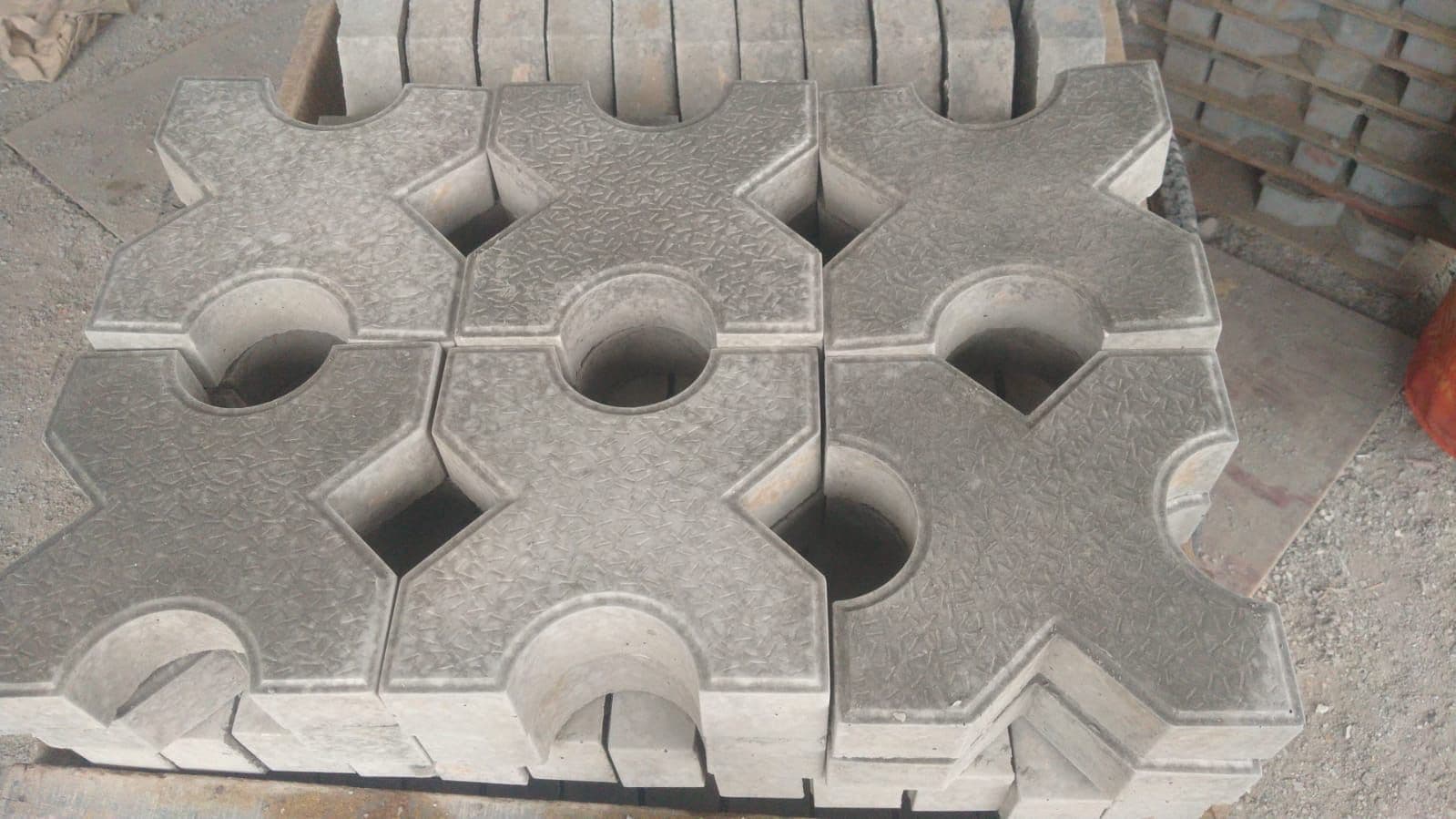
What are grass pavers used for?
Grass pavers are precast concrete products used for green parking, open-grid paving, landscape-friendly surfaces, farmhouse areas, outdoor ground coverage, and drainage-friendly paving requirements.
They are designed with open spaces that can be filled with grass, soil, gravel, or other suitable filling material depending on the site requirement. This makes them useful where buyers want a stronger ground surface without fully covering the area with solid concrete paving.
Common applications of grass pavers
Grass pavers are commonly used for:
- Green parking areas
- Farmhouse parking
- Landscape paving
- Garden and outdoor areas
- Institutional open spaces
- Resort and hospitality projects
- Outdoor utility areas
- Drainage-friendly ground coverage
- Low-speed vehicle movement areas
They are often chosen when the buyer wants a practical paved surface while keeping a greener or more open-grid appearance.
Grass pavers are different from normal interlock pavers
Normal interlock pavers create a more closed surface. Grass pavers create an open-grid surface. This difference affects appearance, drainage, filling method, maintenance, and final site performance.
Grass pavers may be better when the requirement is:
- Green appearance
- Water movement through open spaces
- Grass growth between concrete sections
- Landscape-friendly parking
- Open-grid ground coverage
Interlock pavers may be better when the requirement is a fully paved surface, tighter walking surface, or a more finished hardscape look.
Check expected vehicle movement before choosing
Grass pavers can be used for parking and light vehicle areas, but the final suitability depends on the product, thickness, base preparation, filling method, and expected load.
Before confirming grass pavers, share:
- Whether the area is for walking or parking
- Type of vehicles expected
- Frequency of vehicle movement
- Ground condition
- Drainage requirement
- Whether grass or gravel filling is planned
- Total area
- Delivery location
A farmhouse parking area, institutional parking zone, and regular commercial vehicle area should not be treated the same without discussing site conditions.
Base preparation is very important
Grass paver performance depends heavily on base preparation. The product alone cannot perform properly if the base is weak, uneven, or poorly compacted.
Important site factors include:
- Sub-base strength
- Proper compaction
- Level setting
- Drainage slope
- Bedding layer
- Filling material
- Edge support
- Grass or soil maintenance
- Water flow planning
The installation team or site contractor should decide the base preparation according to the actual site use and soil condition.
Filling method affects final appearance and use
Grass pavers can be filled in different ways depending on the project. The open spaces may be filled with soil and grass, gravel, or other suitable filling material.
The filling method affects:
- Final look
- Drainage
- Maintenance
- Walking comfort
- Vehicle support
- Surface stability
- Grass growth
If the buyer wants a green look, grass growth and maintenance should be planned properly. If the buyer wants a practical parking surface, filling material and compaction should be discussed with the contractor.
How grass paver quantity is estimated
Grass paver quantity is usually estimated from area. Buyers may share the requirement in square feet or square meters.
The basic logic is:
Required pieces = Total area ÷ Coverage per piece
For example, if one grass paver covers about 0.673 square feet and the area is 500 square feet, the approximate requirement is:
500 ÷ 0.673 = about 743 pieces
The final quantity may vary based on layout, edges, cutting, wastage, site measurement, and extra pieces required for replacement or handling.
Colour and finish options may be limited
Grass pavers are usually selected more for function and landscape use than decorative finish. Available colour and finish options may depend on product type, quantity, production plan, and current availability.
For most enquiries, share:
- Required size
- Thickness
- Quantity or area
- Colour preference
- Site use
- Delivery location
- Timeline
If colour is important for the project, confirm it before order discussion.
Delivery and unloading should be planned early
Grass pavers are heavy and quantity-based like other precast products. Delivery discussion depends on quantity, route, vehicle access, unloading readiness, and site restrictions.
Before dispatch, share:
- Exact delivery location
- Site contact person
- Unloading arrangement
- Access restrictions
- Preferred delivery time
- Whether the site can receive the full quantity at once
This helps reduce confusion during transport and unloading.
What to share before requesting a grass paver quote
For a faster quote, share:
- Required area in square feet or square meters
- Product size
- Thickness
- Quantity if already calculated
- Site use: parking, landscape, farmhouse, or open area
- Filling plan: grass, soil, gravel, or other material
- Colour requirement if any
- Delivery location
- Timeline or urgency
If you are not sure about quantity, share the site area and product preference first.
Final recommendation
Grass pavers are useful for green parking, landscape paving, open-grid surfaces, and outdoor drainage-friendly areas. They should be selected based on site use, expected vehicle movement, base preparation, filling method, quantity, and delivery planning.
For Gurugram, Delhi, and Delhi NCR projects, share area, thickness, quantity, site use, filling plan, and delivery location with AR Precast for faster quote discussion.