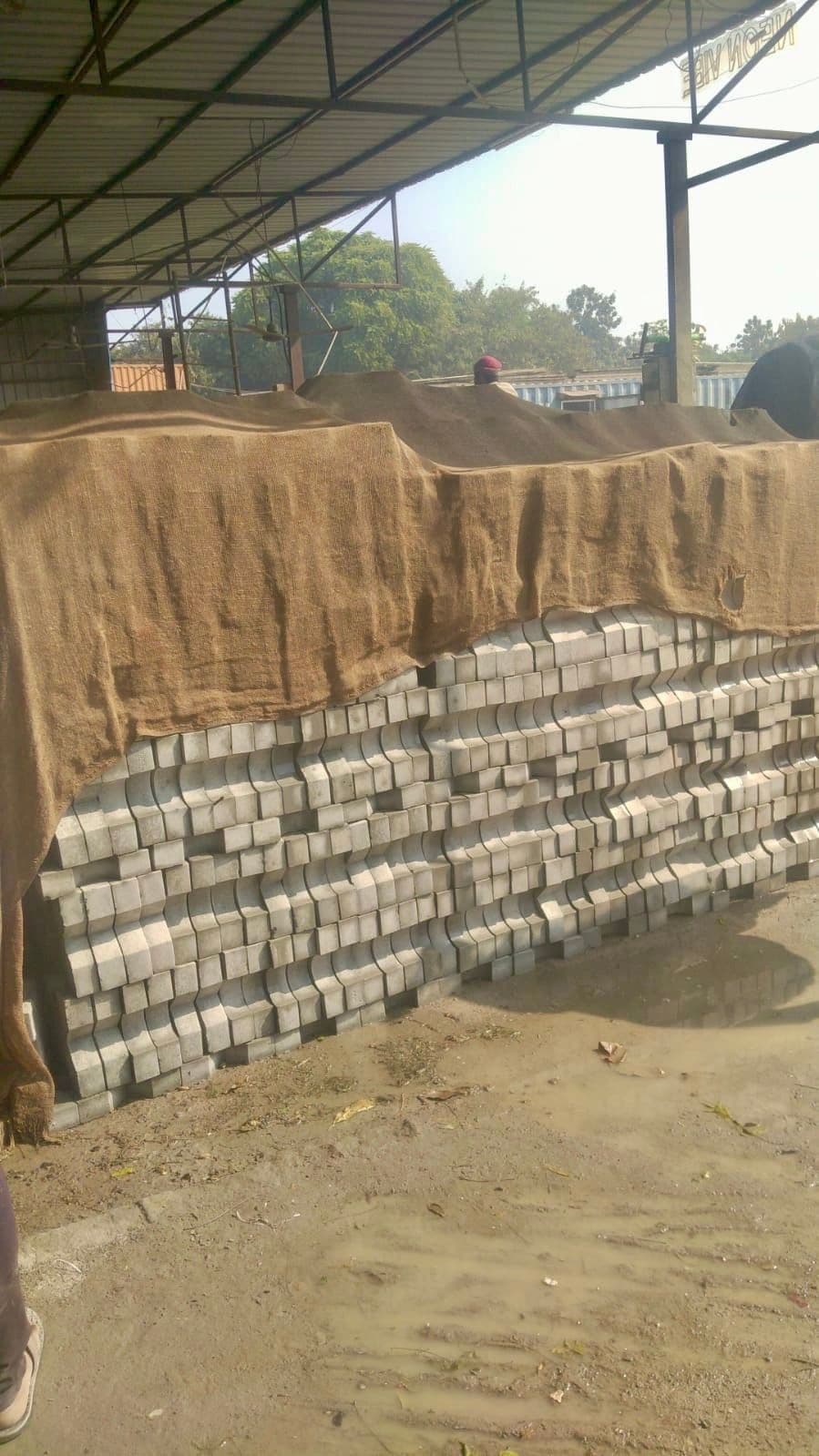
Why paver quantity is calculated from area
Paver quantity is usually estimated from the site area. Buyers may share the requirement in square feet or square meters. The calculator then uses product coverage per piece to estimate how many pieces may be required.
This is useful for early planning, quotation discussion, and comparing product options. However, the final quantity should always be checked with actual site measurement and layout.
Basic formula for paver quantity
The basic formula is simple:
Required pieces = Total area ÷ Coverage per piece
For example, if one paver covers 0.344 square feet and the site area is 1,000 square feet, then the approximate requirement is:
1,000 ÷ 0.344 = about 2,907 pieces
The final number is usually rounded up because you cannot order a fraction of a piece.
Square feet and square meter both work
Some buyers share area in square feet. Some share area in square meters. Both can be used if the product coverage is entered correctly.
Common conversion:
1 square meter = 10.7639 square feet
If your site measurement is in square meters, use the square meter calculator. If your measurement is in square feet, use the square feet calculator.
Coverage per piece depends on product size
Every paver shape has a different coverage per piece. For example, a 200 × 160 mm dumbbell paver covers a different area compared to a 250 × 120 mm zig zag paver.
Coverage depends mainly on:
- Length
- Width
- Shape
- Layout pattern
- Joint spacing
- Actual mould size
For regular products, coverage can be estimated from length × width. For some interlocking or irregular shapes, practical site coverage may need checking based on actual mould and laying pattern.
Why final quantity can differ from calculator output
The calculator gives a planning estimate. The actual order quantity may change because of site and installation conditions.
Common reasons include:
- Actual site measurement difference
- Edge cutting
- Curved areas
- Wastage
- Breakage allowance
- Laying pattern
- Borders and edge restraints
- Level differences
- Site changes after measurement
For clean rectangular areas, the estimate may be close. For irregular layouts, curves, slopes, and multiple sections, extra planning is required.
Add wastage before final order
For most paving work, some extra quantity is practical. The wastage allowance depends on site condition and layout.
Wastage may be needed for:
- Cutting near edges
- Pattern adjustment
- Handling loss
- Broken pieces
- Future replacement pieces
- Site-level correction
The exact wastage percentage should be decided by the contractor or site team based on the project layout.
Example: estimating quantity for a parking area
Suppose a parking area is 800 square feet and the selected paver covers around 0.344 square feet per piece.
Approximate pieces:
800 ÷ 0.344 = about 2,326 pieces
If the site requires extra pieces for cutting and wastage, the final order quantity may be higher.
This is why the calculator should be used for planning, not as a final site-certified quantity.
What details to share for a better quote
Before requesting a quote, share:
- Product name or shape
- Area in square feet or square meters
- Thickness
- Colour
- Finish
- Delivery location
- Site use
- Timeline
- Whether the area is rectangular or irregular
If you already know the approximate quantity, share that too. If not, share the area and product preference.
Why delivery location matters
Pavers are heavy and quantity-based. Delivery planning depends on total pieces, total load, route, unloading access, and site location.
For Gurugram, Delhi, and Delhi NCR enquiries, share the exact delivery location early. This helps with transport discussion and avoids confusion during final quotation.
Final recommendation
Use the area calculator for early planning. Check final quantity with actual site measurement, layout, wastage, and installation team input before confirming the order.
For a faster quote, share product name, area, thickness, colour, finish, quantity if available, and delivery location with AR Precast.